
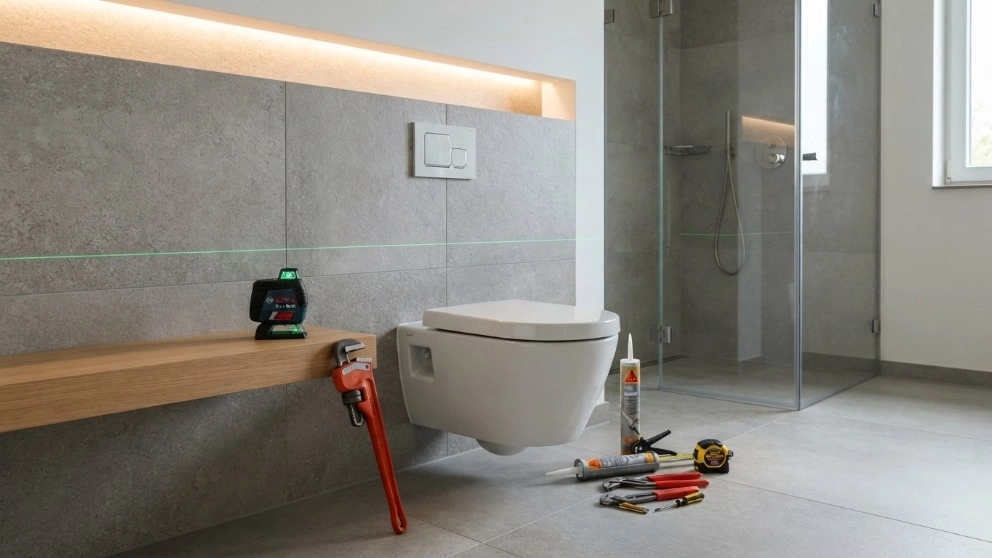
Understanding the structural differences between ground and wall-hung toilets
ground toilet; Classic and reliable
Normal or floor-standing toilets transfer most of their weight to the finished bathroom floor. The sewage outlet of these toilets is usually designed vertically (exit to the floor). The installation of this equipment is easier due to the availability of pipes, but still sealing the sewage outlet to the floor requires high precision to prevent water from penetrating under the tiles.
Wall hanging toilet; Modern, beautiful and compact
Walhang or wall-mounted toilet is designed in such a way that it has no foundation on the floor and its flush tank is completely hidden inside the wall along with the supporting metal chassis (structure). In this system, the weight load of the toilet and the user is directly transferred to the chassis inside the wall. The process of installing and sealing specialized toilets and wall hangings in wall models is far more complicated; Because after tiling the wall, access to the internal connections will be practically impossible, and any error in the initial installation requires the destruction of the toilet walls.
Pre-installation requirements and prerequisites
Before proceeding with the installation and sealing of specialized toilets and wall hangings, it is necessary to check the environmental technical parameters. The experts of Vandad Arvand Rayka Engineering Technical Facilities always measure and check the following items carefully before starting the executive operations:
- Ax of the sewer pipe (for floor toilets): The distance from the center of the sewer pipe to the finished back wall is called ax. It is very important to match the Aux Frangi purchased with the Aux available in the bathroom.
- Wall thickness (for wall hanging): The wall behind the wall hanging must have enough space to place the metal structure and the built-in tank (at least 8 to 12 cm).
- Quality of sewage piping: Use of high-quality pipes such as pushfit or welded polyethylene to prevent possible settlements.
The steps of installing and sealing specialized ground toilets
The installation process of the ground floor may seem simple on the surface, but observing the technical details in sealing it will prevent unpleasant odors from appearing in the future.
1. Preparing the sewer opening
The sewer pipe in the floor should be cut at the same level or slightly higher than the floor ceramic. The edges of the pipe must be completely smooth and free of any pleats or excess cement.
2. Use of high quality muffler (flange).
The most important part in the installation and sealing of specialized toilets and floor hangings is the fume hood installed in the sewer outlet. Screwed or adhesive odor traps equipped with rubber washers (O-ring) create a solid connection between the toilet ceramic outlet and the PVC pipe. The technicians of Vandad Arvand Raika Engineering Technical Facilities always use the best standard fume hoods in the market to guarantee the non-infiltration of sewage gases.
3. Body alignment and stabilization
After placing the toilet on the smoker, the body must be completely leveled with the help of a masonry leveler. Unevenness of the floor should not be compensated by over-tightening the connecting screws; Because it causes the porcelain body to crack. At this stage, it is necessary to use special antibacterial adhesives in the seam between the porcelain body and the floor ceramic.
The steps of installing and sealing specialized wall hanging (built-in toilet)
Due to the high sensitivity of built-in systems, this part requires engineering expertise and precise tools. The work steps are as follows:
1. Installation of metal chassis (structure) in the hardening stage
Before carpentry and tiling, the wall hanging metal chassis must be installed inside the wall. This chassis is fixed to the concrete floor and back wall with the help of strong rollbolt screws. Setting the exact height of the screws holding the bowl (usually 40 cm from the finished floor) is done at this stage.
2. Piping and connection to the sewer and water network
The connection of the elbow outlet of the structure to the main sewer pipe of the building must be done using special connectors and lubricated washers. Also, the piping of cold water entering the built-in tank should be done with five-layer Pax pipes so that the possibility of rotting and leakage is reduced to zero.
3. Tiling and removal of stencils
After installing the structure, the protective cover is placed on the sewer pipes and the flush tank key, and walling and tiling are done around it. Accuracy in cutting the tiles around the connecting pipes is very important.
4. Installing the wall hanging bowl and final sealing
After the gaskets are completely dry, the pipes connecting the sewer and water supply are cut to the exact size and the sealing washers are placed in place. The wall hinge bowl is placed on the chassis bolts and the nuts are slowly tightened. It is necessary to use shock absorbing foam behind the bowl to prevent direct contact between the porcelain and the tile and transfer vibration.
The importance of specialized sealing and the consequences of improper implementation
Sealing in the installation of sanitary equipment is the border between a successful project and a construction disaster. Not paying attention to the details of sealing can cause many problems:
- Moisture penetration into the ceiling of the lower floors: One of the most common problems in apartments is the dampness of the neighbors' roofs caused by rotting or displacement of the toilet sewer washers.
- Emission of unpleasant sewage odors: If the connection of the deodorizer to the pipe is not properly sealed, sepomatic gases leak into the bathroom and toilet space.
- Closing and breakage of the bowl. Wall hanging: If the structure inside the wall is not restrained properly or the screws are not aligned, it will deviate under the pressure of the weight and cause the tiles or the bowl itself to break.
Vandad Arvand Raika Engineering Technical Facilities Group, understanding these sensitivities, carries out all the specialized installation and sealing stages of toilets and wall hangings using first-class materials and polyurethane adhesives and neutral disinfectant silicones to ensure the durability of the system.
Why Vandad Arvand Rayka technical engineering services?
Executing utility projects requires technical knowledge, up-to-date tools and work commitment. Vandad Arvand Raika Engineering Technical Facilities company provides distinctive services to employers by using experienced and expert technicians in the field of mechanical installations.
Some of the features of our services in the field of installing and sealing specialized toilets and wall hangings are:
- Expertise in infrastructure: Accurate implementation of Pushfit and five-layer sewage piping before installing the bowl.
- Using standard materials: Using the highest quality gaskets, odor absorbers and moisture-resistant sealants.
- Precision in alignment and details: Use of laser levels for flawless installation of the chassis, wall hinge and bowl. Ferengi.
- Providing a written guarantee: guaranteeing the performance of the installed system without leakage and without smell.
You can confidently entrust the zero to one hundred design, piping, chassis and final installation of your built-in sanitary equipment to the expert team of Vandad Arvand Raika Engineering Technical Facilities.